
The Highline Trail out to the Grinnell Glacier Overlook is the hike people mean when they say Glacier National Park ruins you for every other park. I did it on September 5th, 2026, and it delivered everything the hype promises — a slow-burn fog that gave way to full sun by midday, close wildlife encounters, one of the more genuinely committing climbs I’ve done in the park, and a payoff view of Grinnell Glacier and the lake below that’s hard to describe without sounding like I’m exaggerating. Here’s the honest, first-hand rundown.
The Trail at a Glance
- Trailhead: Logan Pass — parked just past the visitor center along Going-to-the-Sun Road
- Distance: ~11.4 miles round trip to the overlook and back
- Elevation gain: ~2,450 ft total, with the final spur to the overlook alone climbing roughly 900 ft in under 0.9 miles — that last push is genuinely steep
- Difficulty: Strenuous, mostly because of that final climb — the Highline Trail itself, up to the Garden Wall/Grinnell Glacier junction, is a much more moderate, rolling traverse
Plan your visit: Check the official Glacier National Park NPS page for current trail conditions, Going-to-the-Sun Road status, and vehicle reservation requirements before you go — the Highline is a genuinely popular trail and Logan Pass parking fills early.
Fog to Sunshine
It had rained hard for a few days leading up to this hike, and it showed — we started at 8:45 AM into a thick, low fog that swallowed the Garden Wall almost completely. For the first couple hours, visibility was limited enough that the famous exposure along the Highline’s opening stretch (a narrow ledge blasted into the cliff face, with a fixed cable for handholds in the sketchiest section) felt almost calmer than it probably would in full sun — you genuinely couldn’t see how far the drop went.
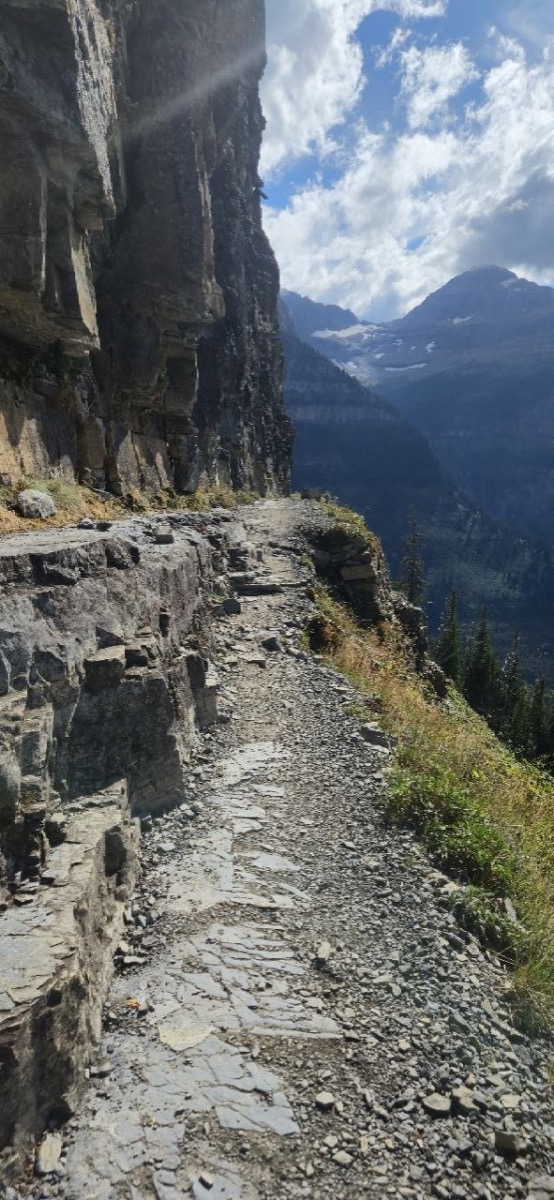 The Highline’s signature ledge trail, blasted into the Garden Wall — narrow enough that the exposure is real, but well-maintained and totally manageable if you take your time.
By the middle of the day, the fog burned off completely and turned into a genuinely beautiful, mostly sunny afternoon. That shift changed the entire character of the hike — the valley views that had been socked in all morning opened up completely.
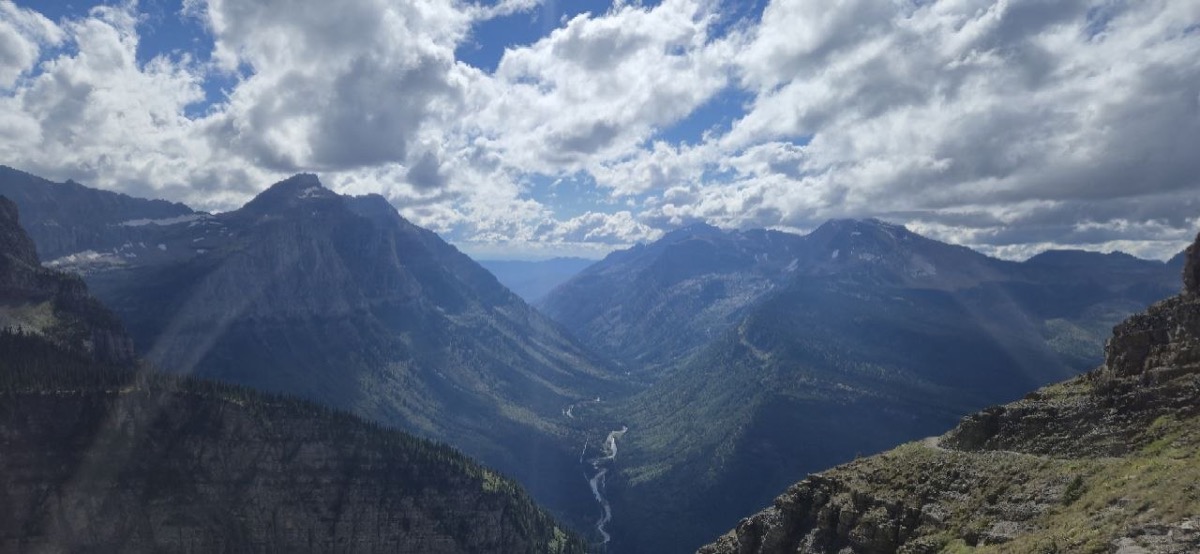 Same trail, completely different hike — once the fog broke, the views down into the valley opened up in a big way.
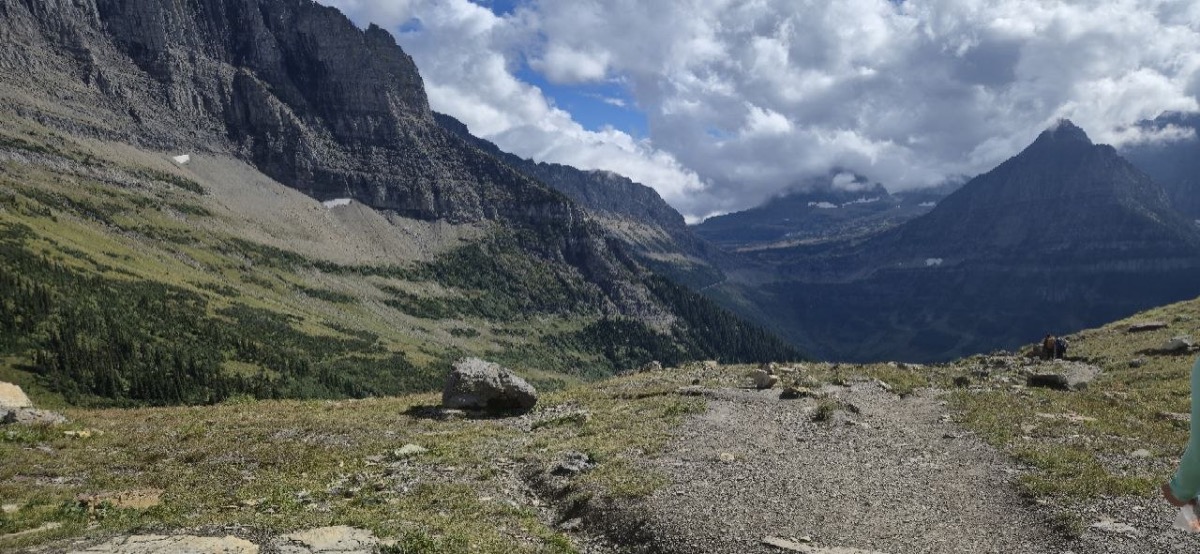 Looking back down toward Logan Pass and the valley — this is the kind of view the early fog was completely hiding.
Wildlife
This was a genuinely good day for animals. Fairly early on, still in the fog, we came across a pair of bighorn sheep resting right along the hillside above the trail — close enough to get a real look at them without disturbing them.
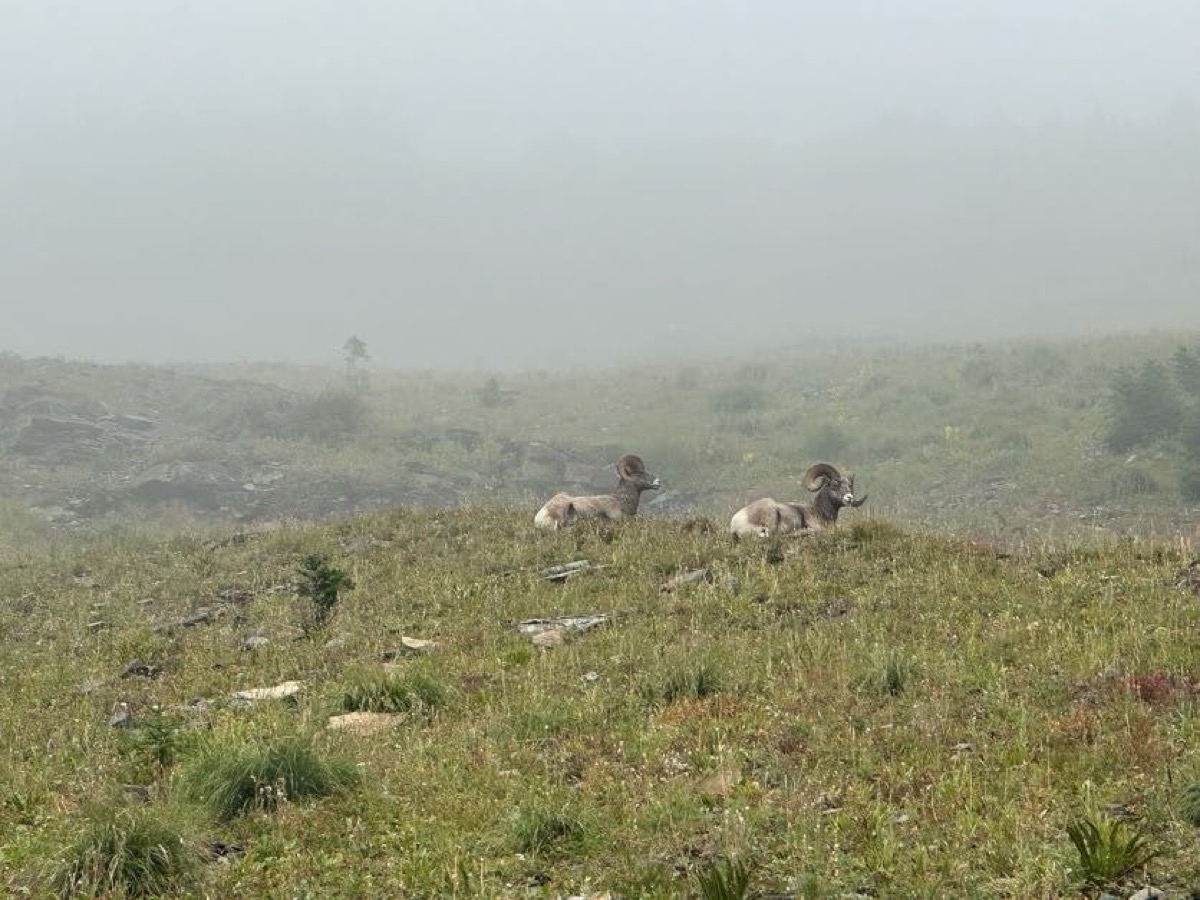 Bighorn sheep, spotted early in the hike while the fog was still thick.
Further along we ran into a few pikas working the talus slopes (one held still just long enough for a clean photo — they usually don’t) and a marmot sunning on the rocks. Then, closer to the Grinnell Glacier Overlook spur, we got the best sighting of the day: a baby mountain goat and its mother, working their way across a near-vertical rock face like it was nothing.
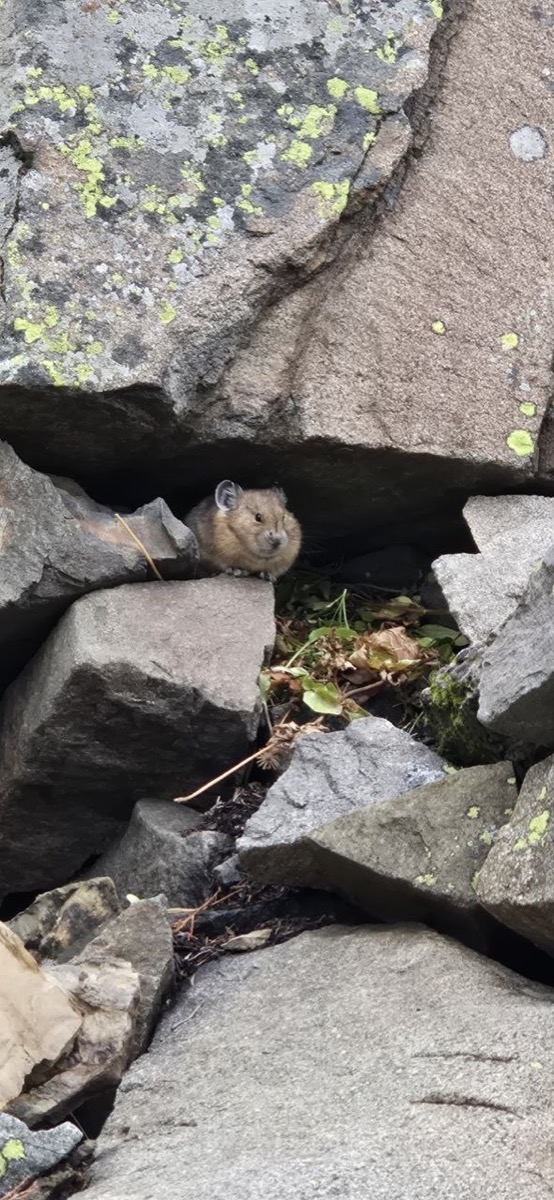 A pika holding still on the talus — they usually don’t sit for a photo this clean.
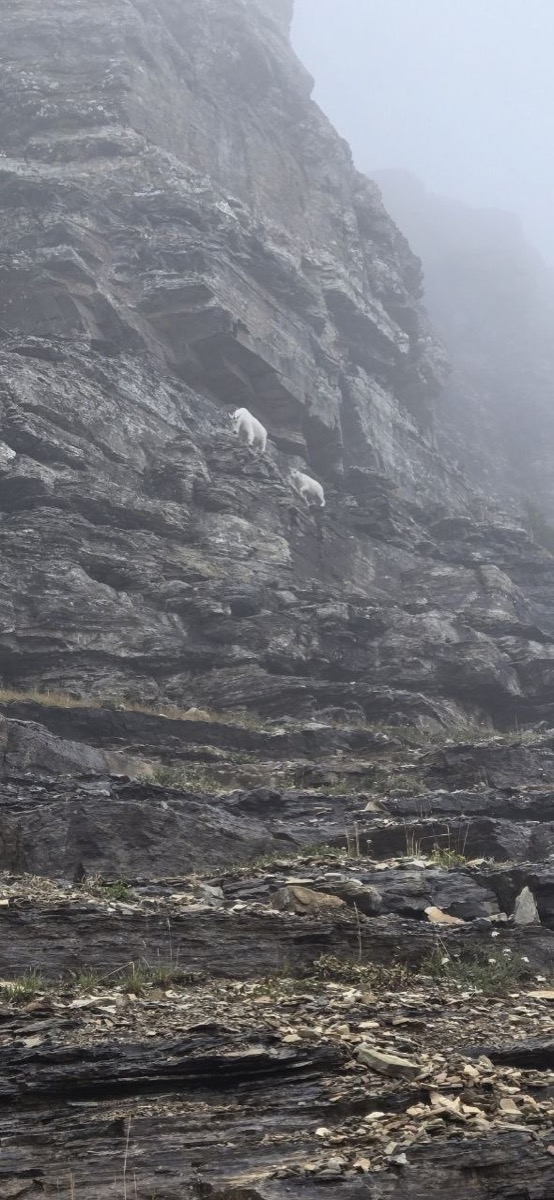 A mountain goat and her kid, working their way across a cliff face near the overlook like it’s flat ground.
(If you’re hiking here, it’s worth knowing how to behave around all of this — see our bear and moose safety guide and how to watch wildlife safely. Mountain goats in particular can be more aggressive than people expect around salt/urine on trail — keep your distance.)
The Climb to the Overlook — the Hardest Part, By Far
The Highline Trail itself, out to the junction where the Grinnell Glacier Overlook spur breaks off, is a rolling, well-graded traverse — genuinely not that hard for its length. The spur is a completely different story. It gains roughly 900 feet in under a mile, straight up the flank of the Garden Wall, and it was, without question, the hardest part of the entire day.
A real caution here, not just a formality: the trail up to the overlook can be extremely slick, especially with any recent rain, and it’s steep with essentially nothing to arrest a fall if you slip in the wrong spot. Take it slow, watch your footing on the loose sections, and don’t push it if conditions are bad. This isn’t a spot to be checking your phone or rushing to beat a crowd.
The payoff at the top is Grinnell Glacier itself, along with Upper Grinnell Lake, laid out below the overlook in a way that’s honestly hard to photograph well enough to do it justice.
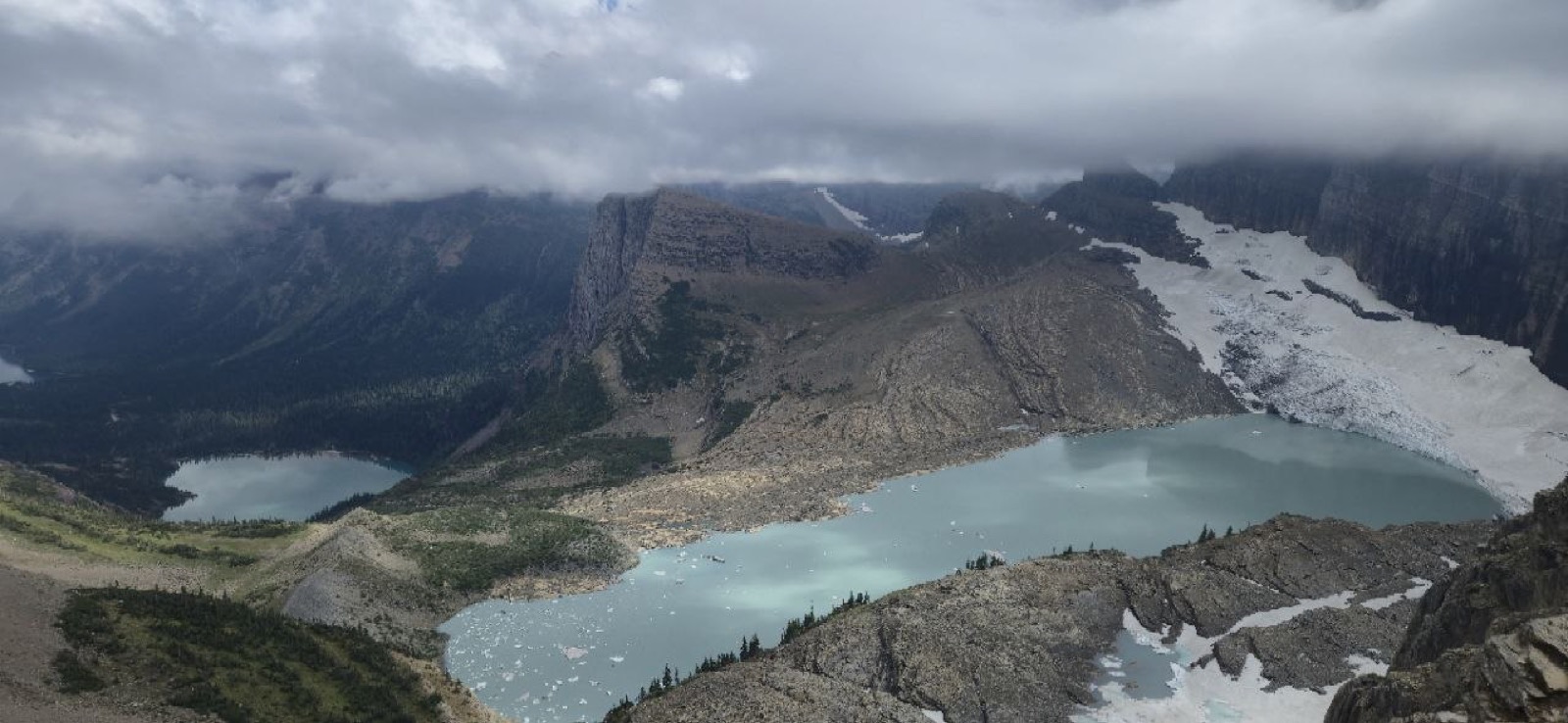 The view from Grinnell Glacier Overlook — the glacier and the milky turquoise lake below it, worth every bit of that climb.
One tip that’s worth knowing before you go: don’t stop at the first spot that looks like “the overlook.” There’s an established trail that continues a bit further and gets you a genuinely better vantage point — it’s not hard to find or follow, just keep going a little past where a lot of people seem to stop.
What I Wore
Weather swung from foggy-and-cool to sunny-and-warm over the course of the day, which made layering choices matter more than usual.
- PackLite Life Gold Geometric Sports Jersey — my base layer up top the whole day. Breathable enough for the climb, and I liked having it on for the sunny stretch once the fog cleared.
- Drake Waterfowl Lightweight Packable Jacket — on and off repeatedly as conditions shifted; see my full review for more on how it performed on this exact hike.
- Teva Trailwinder hiking shoes — solid grip on the mixed rock/dirt terrain, including the loose sections on the overlook climb.
- Orvis Water-Resistant Trek Pants — one of my favorite hiking pants. Stretchy, genuinely water-resistant, and light — they handled the damp early-morning brush and the exposed, sun-warmed afternoon equally well.
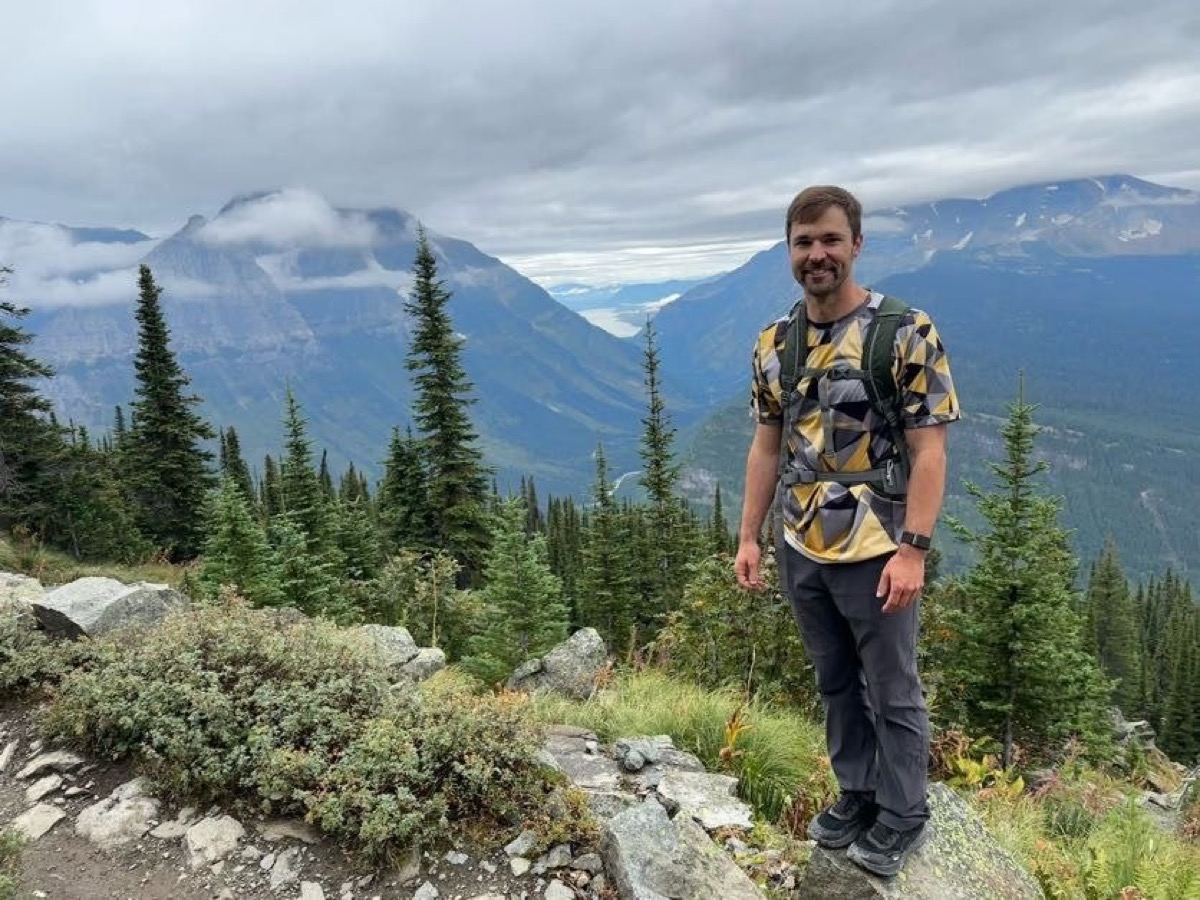 The gear setup for the day — jersey, packable jacket on standby, Orvis pants, Trailwinders.
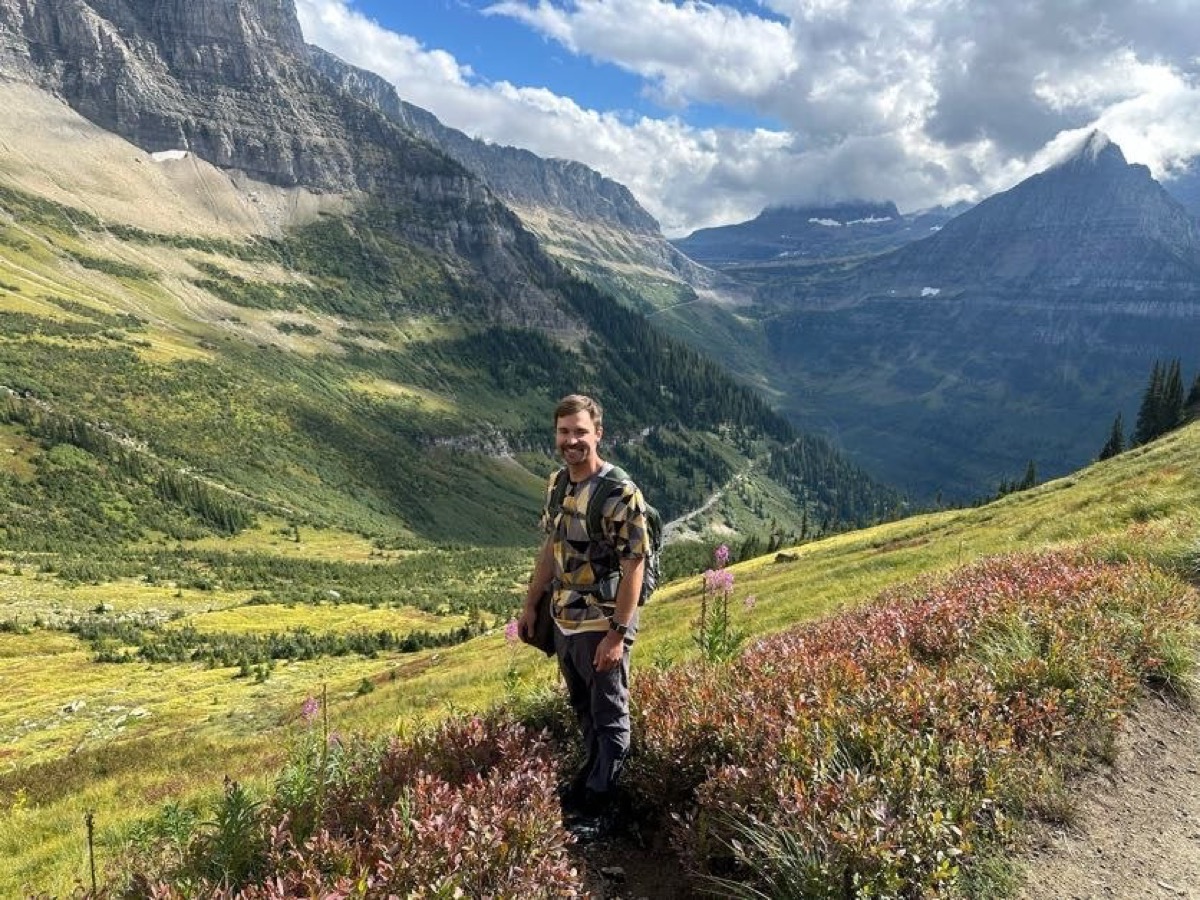 Later in the hike, once the sun had fully come out.
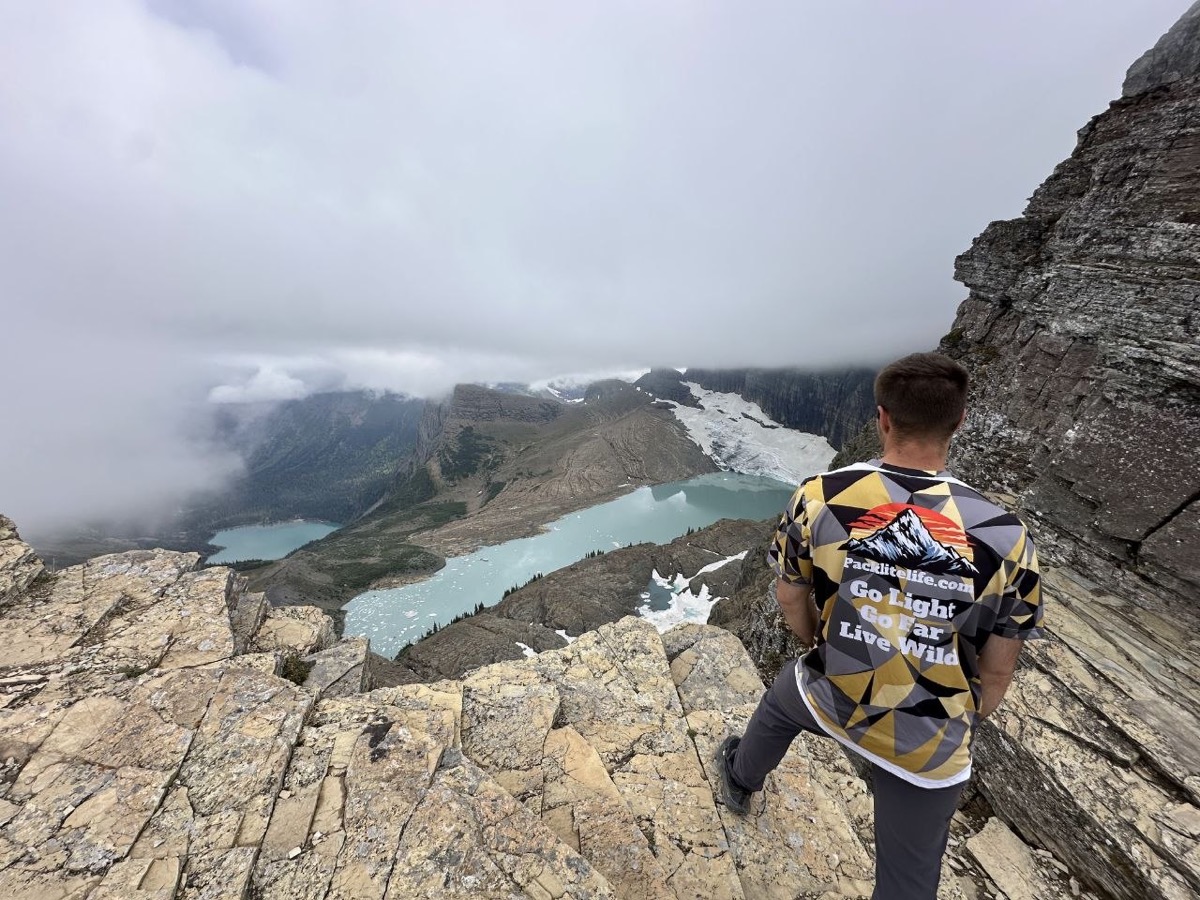 At the overlook itself — the jersey’s back graphic looking out over the actual glacier it depicts.
Logistics & Tips
- Start early. We were on trail by 8:45 AM and back at the car around 6:00 PM — this is a full-day hike, not a quick outing, especially once you factor in the overlook spur and stopping for wildlife and photos.
- Parking at Logan Pass fills up fast. We parked just past the visitor center; get there early or expect to wait.
- Check conditions before committing to the overlook spur, especially after rain. Given how slick that final climb can get, if the rock is visibly wet or you’re not feeling steady, it’s a completely reasonable call to turn around at the junction and skip it.
- Don’t stop at the first “overlook” spot — push on a bit further on the established trail for the better view.
- Bring layers. Fog-to-full-sun in one day is a completely normal Glacier pattern — we needed both a packable insulating layer and sun protection on the same hike.
Who It’s For
I’d recommend the full route — Highline Trail plus the Grinnell Glacier Overlook spur — to hikers with solid fitness and sure footing, specifically because of that steep, exposed final climb. If you’re hiking with anyone nervous about heights or unstable footing, the Highline Trail itself (without pushing to the overlook) is still a fantastic, much more moderate hike on its own.
Related Guides
- Glacier National Park: Best-Kept Secrets
- Otokomi Lake, Glacier National Park — Trip Report
- Swiftcurrent Pass, Glacier NP — Trip Report
- Bear and Moose Safety
- Drake Waterfowl Lightweight Packable Jacket Review
Go Light. Go Far. Live Wild.
Get the Sub-10 lb Ultralight Gear Checklist
Join the free PackLite Life newsletter — new gear guides, trip reports, and trail-tested tips — and grab the printable checklist when you sign up. No spam, unsubscribe anytime.