Like guides like this? Get new ones by email.
Montana’s Glacier National Park is the wildest of the lower-48 crown jewels — turquoise lakes, hanging glaciers, knife-edge ridges, and one of the densest grizzly populations anywhere. It’s less manicured and more rugged than its famous cousins, which is exactly the appeal. Here are the must-see icons and the quieter corners worth the extra effort.
Plan your visit: Check the official Glacier National Park NPS page for current hours, fees, alerts, road conditions, and tour/permit reservations before you go.
Must-See Icons
Going-to-the-Sun Road — One of the most spectacular drives on Earth, climbing over the Continental Divide at Logan Pass. ⚠️ It usually doesn’t fully open until late June or July (snow clearing takes months), and requires a vehicle reservation in peak season. Drive it slow and stop often.
Logan Pass & Hidden Lake Overlook — From the top of the road, an alpine boardwalk climbs through wildflowers and mountain goats to a stunning overlook. The most popular short hike in the park for good reason.
Many Glacier — The heart of the park: Grinnell Glacier, Swiftcurrent, and a string of glacial lakes ringed by peaks. Prime grizzly and moose habitat. (Read our Swiftcurrent Pass trip report for a first-hand look.)
Lake McDonald — The park’s largest lake, famous for its multicolored pebbles in crystal-clear water. Sunrise here is magic.
St. Mary Lake & Wild Goose Island — The classic Glacier postcard view on the east side. The Rising Sun area here is also the trailhead for Otokomi Lake — see our first-hand trip report from two different seasons on that trail.
The Highline Trail — A jaw-dropping traverse along the Garden Wall from Logan Pass — one of the best day hikes in North America. We hit it on a foggy morning that burned off into full sun by midday, with bighorn sheep, a pika, and a mountain goat and her kid along the way — read the full Highline Trail to Grinnell Glacier Overlook report for the real trail conditions and why it’s worth pushing past the first “overlook” spot people stop at.
Best-Kept Secrets
- Iceberg Lake — A turquoise lake with floating icebergs into summer, ringed by a 3,000-ft headwall (Many Glacier). Stunning and less mobbed than Grinnell.
- Cracker Lake — An almost unreal milky-turquoise lake fed by glacial flour — one of the most vivid colors in the park, and quiet.
- Ptarmigan Tunnel — A hand-cut tunnel through a knife-edge ridge that opens to a completely different valley. A true adventure.
- Two Medicine — The whole southeast corner is gorgeous and far quieter than Many Glacier or Logan Pass. Hike to Cobalt Lake (see our first-hand trip report) or the Dawson–Pitamakan loop.
- Bowman Lake (North Fork) — Remote, down a long dirt road, and worth it for the solitude and reflections.
- Apikuni Falls & Redrock Falls — Short, rewarding waterfall hikes near Many Glacier that most people drive past.
- Siyeh Pass — A high, dramatic pass hike with massive views and a fraction of the Highline’s crowds.
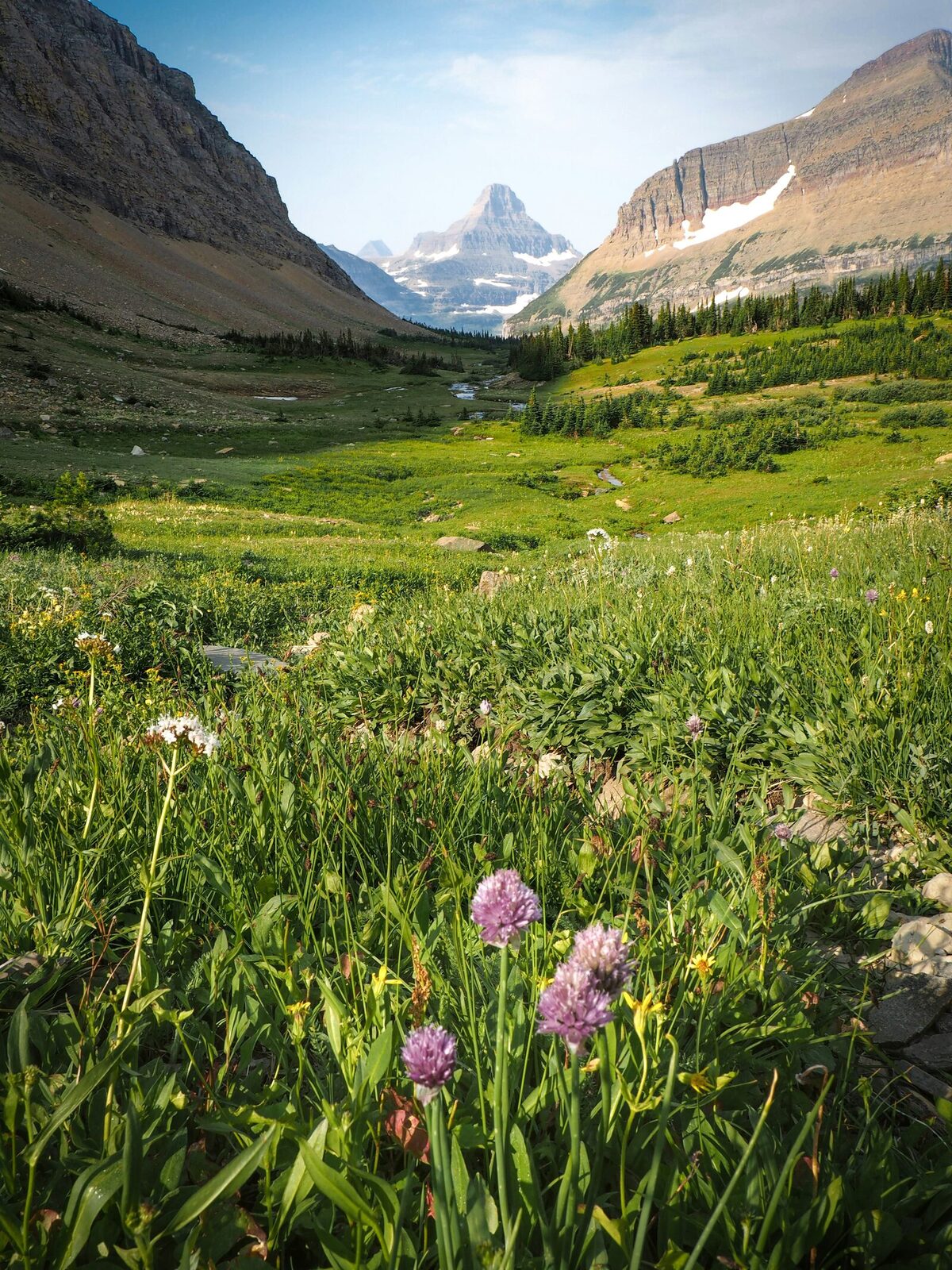 Summer wildflowers and glacier-carved peaks in Glacier’s high country — the reward for timing your visit right.
When to Go
- July–early September is the sweet spot — Going-to-the-Sun Road is open and high trails are mostly snow-free.
- Late June: waterfalls roar, but the high road/passes may still be snowbound (as our late-May Swiftcurrent trip shows).
- September: thinning crowds, golden larches, crisp air — a local favorite.
Beating the Crowds
- Vehicle reservations are required for Going-to-the-Sun Road and some areas in peak season — book ahead.
- Start before 7 a.m. — Logan Pass and Many Glacier lots fill early.
- Base on the east side (Many Glacier, Two Medicine, St. Mary) for fewer crowds than the busy west/Lake McDonald entrance.
This Is Serious Grizzly Country
Glacier has one of the densest grizzly populations in the lower 48. Carry bear spray, keep it accessible, make noise, and never hike toward wildlife. This is non-negotiable here — read our bear safety guide first.
Check bear spray prices on Amazon →
What to Pack
Alpine weather changes fast — sun to sleet in an hour, even in July. Layers, a rain shell, sun protection, and plenty of water are essential. See our layering system, gear checklist, and best footwear.
Bottom Line
- Do the icons: Going-to-the-Sun Road, Logan Pass, Grinnell Glacier, Lake McDonald.
- Earn the secrets: Iceberg and Cracker Lakes, Ptarmigan Tunnel, and the quiet Two Medicine corner.
- Respect the grizzlies, reserve ahead, and start early.
Want it from boots on the ground? Read our first-hand Highline Trail to Grinnell Glacier Overlook, Otokomi Lake, Swiftcurrent Pass, and Cobalt Lake trip reports.
Glacier is also the dramatic northern terminus of the Continental Divide Trail — if a day trip here has you dreaming bigger, that’s where to start.
More parks planning: Banff · Yosemite · Zion · Everglades · Voyageurs · Yellowstone · Great Smoky Mountains.
Go Light. Go Far. Live Wild.
Get the Sub-10 lb Ultralight Gear Checklist
Join the free PackLite Life newsletter — new gear guides, trip reports, and trail-tested tips — and grab the printable checklist when you sign up. No spam, unsubscribe anytime.