
Like guides like this? Get new ones by email.
Bears and moose are the two large animals most likely to hurt you in North American backcountry — and the responses to each are almost opposite. The good news: the vast majority of encounters end with the animal wandering off, if you read it right and react correctly. Here’s how to recognize trouble and respond — for both.
This guide is about encounters. For food storage, bear canisters, and hanging in bear country, see our bear safety for backpackers guide; for keeping a safe distance in the first place, see how to watch wildlife safely.
First Rule: Distance and Awareness
Most dangerous encounters start because someone got too close or surprised the animal. Prevent them:
- Make noise in dense brush, near streams, and on blind corners so you don’t surprise anything. Talk, clap — bear bells are largely useless on their own.
- Keep your distance — 100+ yards from bears, 25+ yards from moose. Never approach for a photo.
- Never feed wildlife or get between a mother and her young.
- Carry bear spray where bears live — kept accessible in a quick-draw chest or hip holster, not buried in your pack — and know how to use it. It’s effective on moose too.
- Consider an air horn as a backup deterrent — a sudden loud blast will often move a curious animal along before things escalate.
Reading the Warning Signs
An animal almost always tells you it’s stressed before it charges.
A stressed bear may: huff or “woof,” pop its jaw, salivate, swat the ground, turn sideways to look big, or do a bluff charge (running at you then veering off or stopping). Ears back and a lowered head are bad signs.
A stressed moose may: pin its ears back, raise the hair on its hump (hackles), lower its head, lick its lips or snout, and stomp its front feet. These mean a charge could be imminent — act now.
Bears: How to Respond
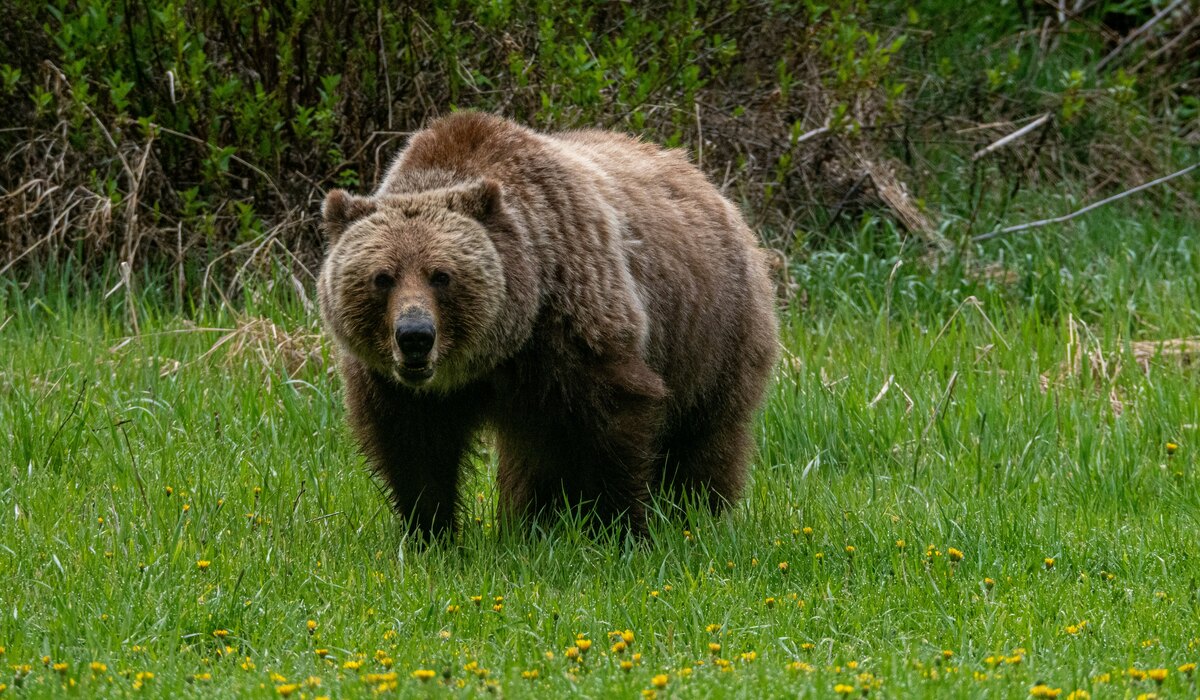 A grizzly’s prominent shoulder hump and dished face set it apart from a black bear — and the two call for different responses.
Tell black from grizzly (it changes everything)
It’s about shape, not color (both come in many colors):
- Black bear: no shoulder hump, taller pointed ears, straight face profile.
- Grizzly/brown bear: prominent shoulder hump, shorter rounded ears, dished face, long claws.
If you encounter a bear
- Do NOT run. Running triggers a chase instinct, and no human outruns a bear.
- Stand your ground, stay calm, talk in a low voice, and back away slowly while facing the bear. Make yourself look big; don’t make direct eye contact aggressively.
- Ready your bear spray; deploy it in a cloud as the bear closes to ~30–60 feet.
If a bear actually attacks
- Grizzly/brown bear (defensive attack): play dead. Lie on your stomach, clasp hands behind your neck, keep your pack on, spread your legs so it can’t flip you. Stay still until the bear leaves.
- Black bear (or any predatory, stalking bear): fight back with everything — rocks, sticks, fists — aimed at the face and muzzle. Do not play dead.
- Any bear that’s stalking you as prey (following calmly, no cubs around): fight back regardless of species.
Moose: How to Respond (the opposite playbook)
Moose aren’t predators — they don’t want to eat you. But they’re enormous, surprisingly fast (35 mph), and aggressive when they feel threatened, especially cows with calves in late spring and bulls during the fall rut. They injure a lot of people precisely because hikers underestimate them.
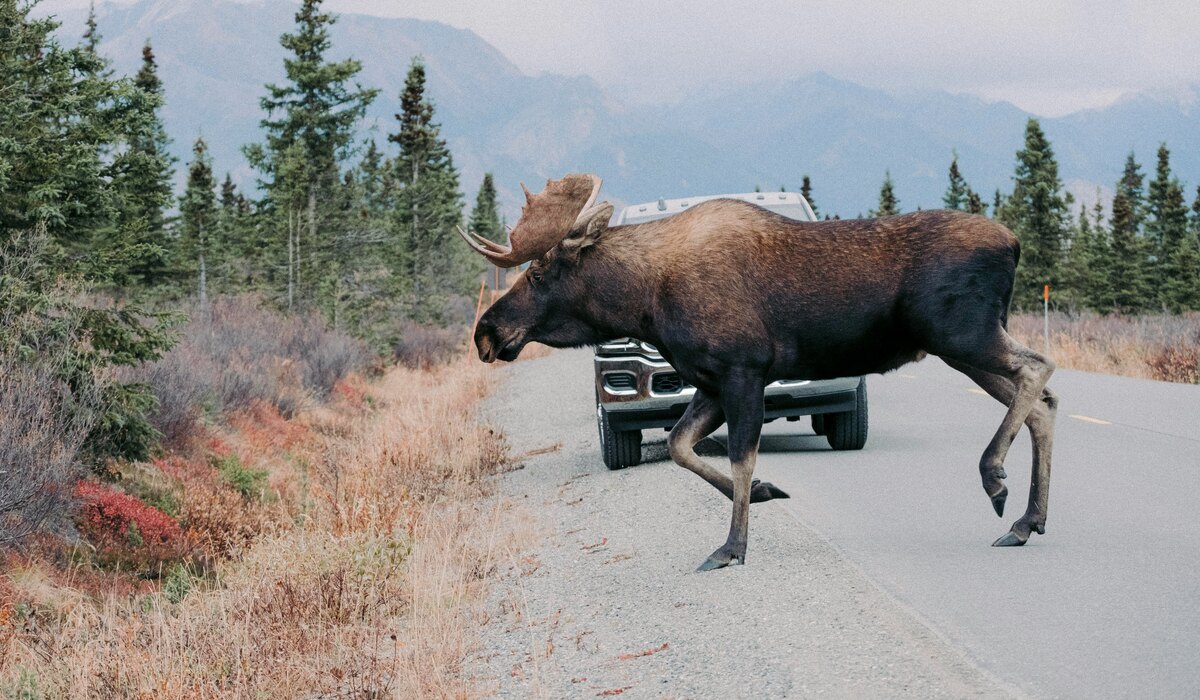 Give moose plenty of room — and if one charges, put a vehicle, tree, or boulder between you.
- Give them room. If a moose is on the trail, stop and wait, or detour widely. Don’t try to push past.
- If it shows warning signs or charges — RUN. This is the key difference from bears: you should run from a moose, and put a large solid object between you — a tree, boulder, or vehicle. A moose usually won’t chase you far or around obstacles.
- If it knocks you down: curl into a ball, protect your head and neck with your arms, and stay still until it moves off. Moose attack by stomping and kicking; playing dead works here because they stop once they no longer feel threatened.
- Bear spray works on moose too if one is closing in.
Dogs Are a Major Trigger
For both animals, an off-leash dog is one of the most common ways encounters turn violent. Dogs chase, bark, and provoke — then run back to you with an angry bear or moose behind them. Keep dogs leashed in wildlife country, or leave them home.
Season & Region Notes
- Spring: cow moose with newborn calves are extremely defensive; bears are hungry coming out of dens.
- Fall: bull moose in rut are unpredictable and aggressive; bears are in hyperphagia (feeding hard) before winter.
- Grizzly country (Yellowstone, Glacier, the Rockies, Alaska) raises the stakes — bear spray isn’t optional there. See our Yellowstone and Glacier guides.
- Carry a way to call for help. After a serious encounter you may be far from cell service — a satellite communicator like the Garmin inReach Mini 2 lets you trigger an SOS and message for rescue from anywhere.
Bottom Line
- Prevent encounters: make noise, keep your distance, carry bear spray, leash dogs.
- Bears: don’t run; back away; play dead for a defensive grizzly, fight back against a black or predatory bear.
- Moose: do run and get behind something solid; curl up and protect your head if knocked down.
- Read the warning signs — ears back, raised hackles, huffing, stomping — and act before it escalates.
Related Guides
- 📚 Backcountry Safety Guide — the complete guide
- Bison Safety: Why They’re More Dangerous Than Bears
- Bear Safety for Backpackers (Food Storage & Camping)
- How to Watch Wildlife Safely
- Leave No Trace in the Backcountry
- The Complete Backpacking Gear Checklist
Respect the wild things. Know how to react.
Frequently Asked Questions
Should you run from a bear or a moose?
What do you do if a bear attacks?
Are moose dangerous?
What are the warning signs a moose is about to charge?
Get the Sub-10 lb Ultralight Gear Checklist
Join the free PackLite Life newsletter — new gear guides, trip reports, and trail-tested tips — and grab the printable checklist when you sign up. No spam, unsubscribe anytime.